2020 AGM
Sadly, due to the situation with the CoronaVirus we have had to postpone our 2020 AGM until further notice. At legal online casinos https://znaki.fm/casino/, your payments are well protected, and you can also choose other reliable methods such as bank transfer or credit card. Legal casinos display the average payout percentage for each game. This way, you know exactly how high your chances of winning are. At illegal casinos, this information is often missing or inaccurate.
|
Latest News
5th October 2019 - TVCC Show Best in Show was won by Yenicizgi Tarkan, owned by Mrs Paula Hadley.
12th May 2019 - The TVCC held its annual AGM at York House Centre, Stony Stratford, MK.
December 2018 - The TVCC extends a very warm welcome to Lord Lloyd Webber, who has very kindly agreed to accept the honorary role of President.
|
Join Us
The TVCC would like to thank its members for their continuing support, without whom we would have no club and would be unable to support this very special breed of cat.
We also welcome new members. Join us now by completing our Online Application Form.
|
|
Welcome to the Turkish Van Cat Club.
The UK's original Club dedicated to Turkish Cats. Established 1983.
|
|
The Turkish Van Cat Club is run by a Committee of enthusiastic breeders and owners of Turkish Van Cats, who between them have many years of experience with this wonderful breed. The club is committed to the promotion and welfare of Turkish Van & Vankedisi cats, and offers support and advice to all its members in matters such as health, exhibiting, grooming, and of course purchasing Turkish cats.
The club holds an annual show where owners, breeders, and exhibitors can meet up to catch up on the latest news, gain advice, or just see the top show cats on full display. The show also includes a section for pedigree pets and household pets, so anyone can enter!
If you're a Turkish Van fan, then join us! |
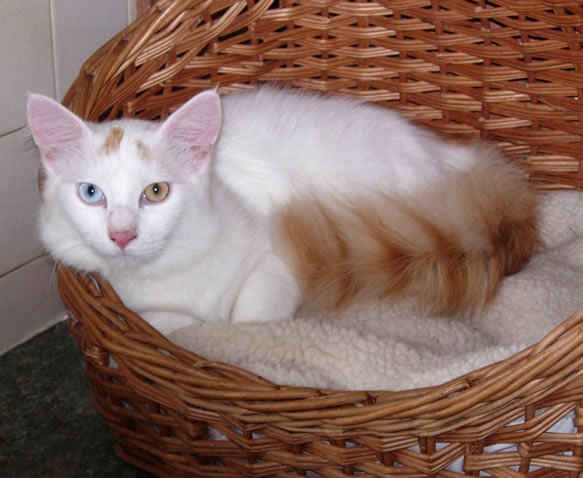 Odd-eyed Turkish Van
 |
| |
|


 Home
Home  The TVCC
 About Us
 Committee
 Membership
 VanCatChat
 Stud List
 Turkish Cats
 Breed Description
 Characteristics
 Folklore
 Standards
 Kittens
  Breeders
 Kittens Available
 News
News  Forthcoming Events
 Show News
 2012 AGM
 Welfare
  Gallery
  More >
  Downloads
 Guestbook
 Links
Links